Map the real day.
The workflow starts with how people actually handle time, approval, corrections, and handoff.
Working prototype · reviewed September 9, 2026
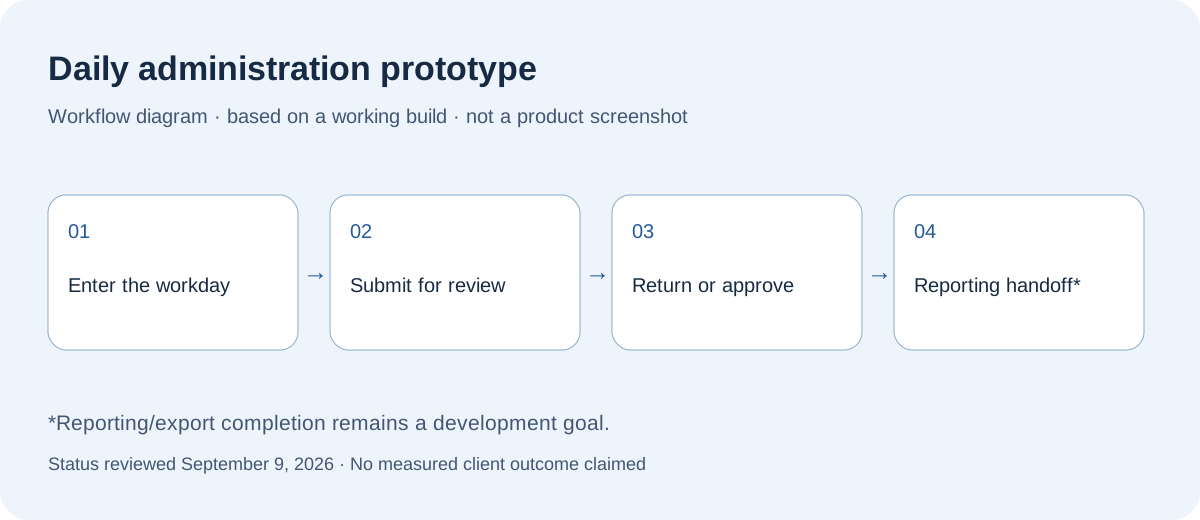
A working production administration prototype connects daily time entry, submitted records, and review states. It demonstrates the path from a workday record to an approval decision.
A growing-team example from Digital Refraction. Reporting/export completion and wider rollout remain separate work, not claimed results.

THE WORK BEHIND THE IDEA
Built and planned scope
This workflow shows how a real operating problem can become a focused tool instead of another generic spreadsheet.
Implemented: daily time entry, workday details, signatures, and visible review states.
Talk through this with us ↗How the work is shaped
The product direction comes from the actual friction of daily administration.
The workflow starts with how people actually handle time, approval, corrections, and handoff.
The prototype brings daily time entry, signatures, and review states into one workflow, so a reviewer can see which records need attention.
The goal is practical reporting and cleaner exports that support the people doing the work.
Why it matters
A good custom tool starts from real operating details instead of forcing a generic tool to fit.
The tool is built for a real working rhythm where daily time, approvals, and reporting handoff need to fit the day.
The system supports real review and iteration, so the workflow can improve around actual use instead of guesses.
The same approach applies to service businesses: understand the real workflow first, then build the tool around it.
You do not need a polished brief. These are the details we work through before a build begins.
LocalCare helps established owner-operated businesses implement AI and workflow automation. Custom projects start at $5,000 CAD; one recurring workflow is a useful starting scope.
Your proposal will name the person responsible for delivery and your day-to-day contact. We agree who needs to review decisions before work starts.
Yes. Start with the existing website, spreadsheet, or app. A configuration change or an off-the-shelf tool may be enough; custom software is useful when the missing workflow justifies it.
One defined problem, agreed deliverables, review points, and a handoff. The proposal separates included work from additions such as more pages, integrations, data cleanup, or ongoing content changes.
Workflow complexity, integrations, data readiness, testing, and team review determine the price and schedule. We agree both before implementation; subscriptions, usage, and ongoing maintenance are identified separately.
Hosting, domains, paid tools, email services, and AI usage can have recurring charges. The proposal identifies which are needed, who pays for them, and whether support or future changes are separate.
Before starting, we document account ownership, access, the rights to content and custom code, third-party licences, and available data exports. The handoff should make clear what you can keep, move, or maintain elsewhere.
The agreed support plan sets out its duration, included fixes, contact method, response hours, and how extra work is priced. Launch support is not an unlimited maintenance subscription.
A person who can make decisions, examples of the current work, approved content, and access through an appropriate account invitation. We agree review dates and dependencies before setting the launch date.
Build around reality
We can help decide whether you need a custom tool, a simpler workflow, or a better connection between the tools you already use.
Prefer email? Say hello ↗